Custom System: MAQCS: Multicore Atomic Quantum Computing System

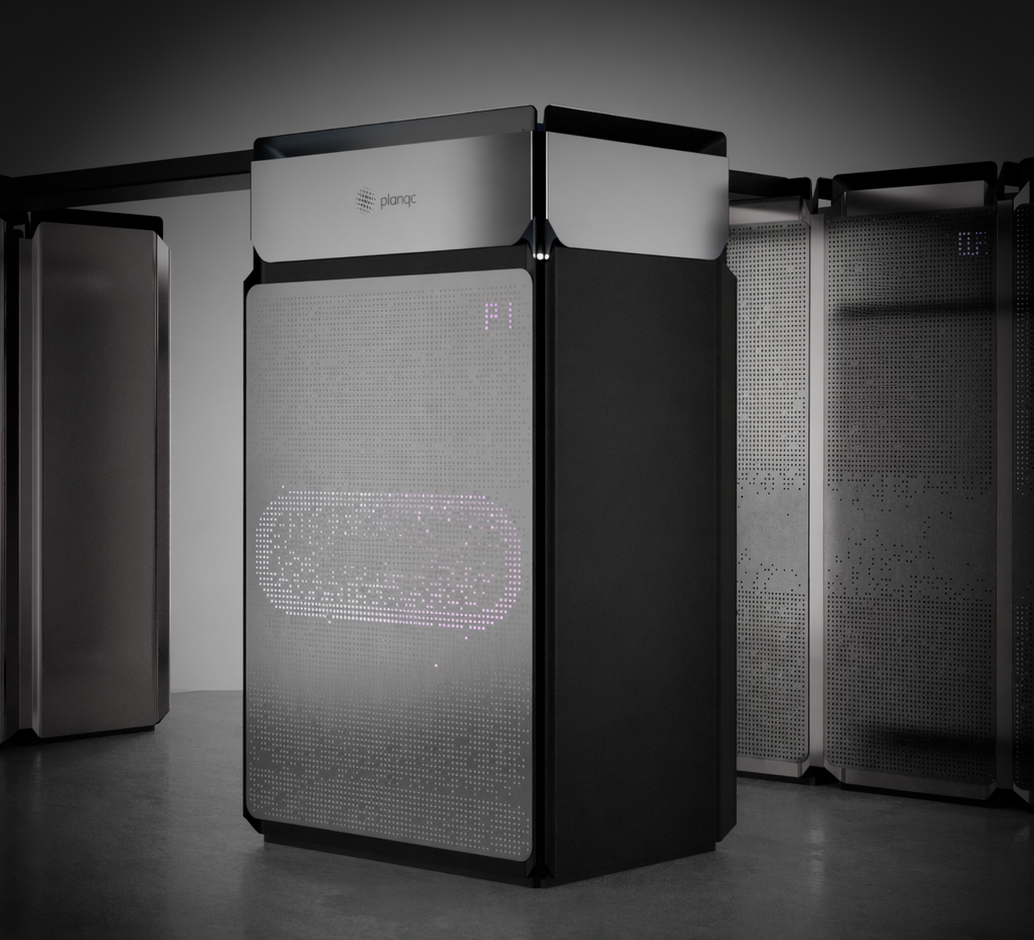
MAQCS is a €20 million project funded by Germany’s Federal Ministry of Education, Research and Technology (BMFTR) to build and deploy a fully-digital, 1,000-qubit neutral-atom quantum computer at the Leibniz Supercomputing Centre (LRZ).
MAQCS delivers a universally programmable quantum computer based on neutral atoms. Its pioneering multi-core design enables parallelization and latency-hiding techniques that significantly increase operational efficiency. By surpassing the 1,000-qubit threshold, the system provides a powerful foundation for applications.
The project will reach Technology Readiness Level 6, demonstrating the quantum computer not as a laboratory setup but as a fully integrated co-processor inside LRZ’s HPC ecosystem. LRZ users will gain seamless access via cloud interfaces. This integration is enabled through LRZ’s Munich Quantum Software Stack (MQSS), which tightly couples quantum hardware with HPC workflows.
MAQCS System Specifications
-
Neutral atoms
in optical lattices are the basis of our quantum computing platform
-
>1,000 qubits
The qubit count of our prototype is industry-leading
-
Multi-core architecture
with latency-hiding parallel processing

We’re excited to bring planqc’s neutral atom system into LRZ and to work together to merge its unique capabilities into our integrated High-Performance Computing and Quantum Computing (HPCQC) environment for the benefit of our users’ research. The potential wins for next-generation hybrid computing are many.
Project Facts
- Project
- Multicore Atomic Quantum Computing System (MAQCS)
- Scope
- Development and deployment of a 1,000-qubit, universally programmable neutral-atom quantum computer integrated into LRZ’s HPC environment
- Duration
- –
- Funding
- € 19.1 million (74.4 % funded by Germany’s Federal Ministry for Education, Research and Technology (BMFTR, formerly BMBF)
- Partners
- planqc (Coordinator)
- Leibniz Supercomputing Centre (LRZ)
- Max Planck Institute of Quantum Optics (MPQ)
-

Davide Dreon
Head of Product Development