Curiosity, persistence, and a fascination for the unknown: in our next Women in Quantum feature, Ayse Kotil, Team Lead for Gate-Based Quantum Optimization at planqc, shares what first sparked her interest in quantum computing and how she navigated her path in a still male-dominated field. She reflects on building confidence through experience, the power of collaboration, and why diversity is essential for innovation in quantum technology.
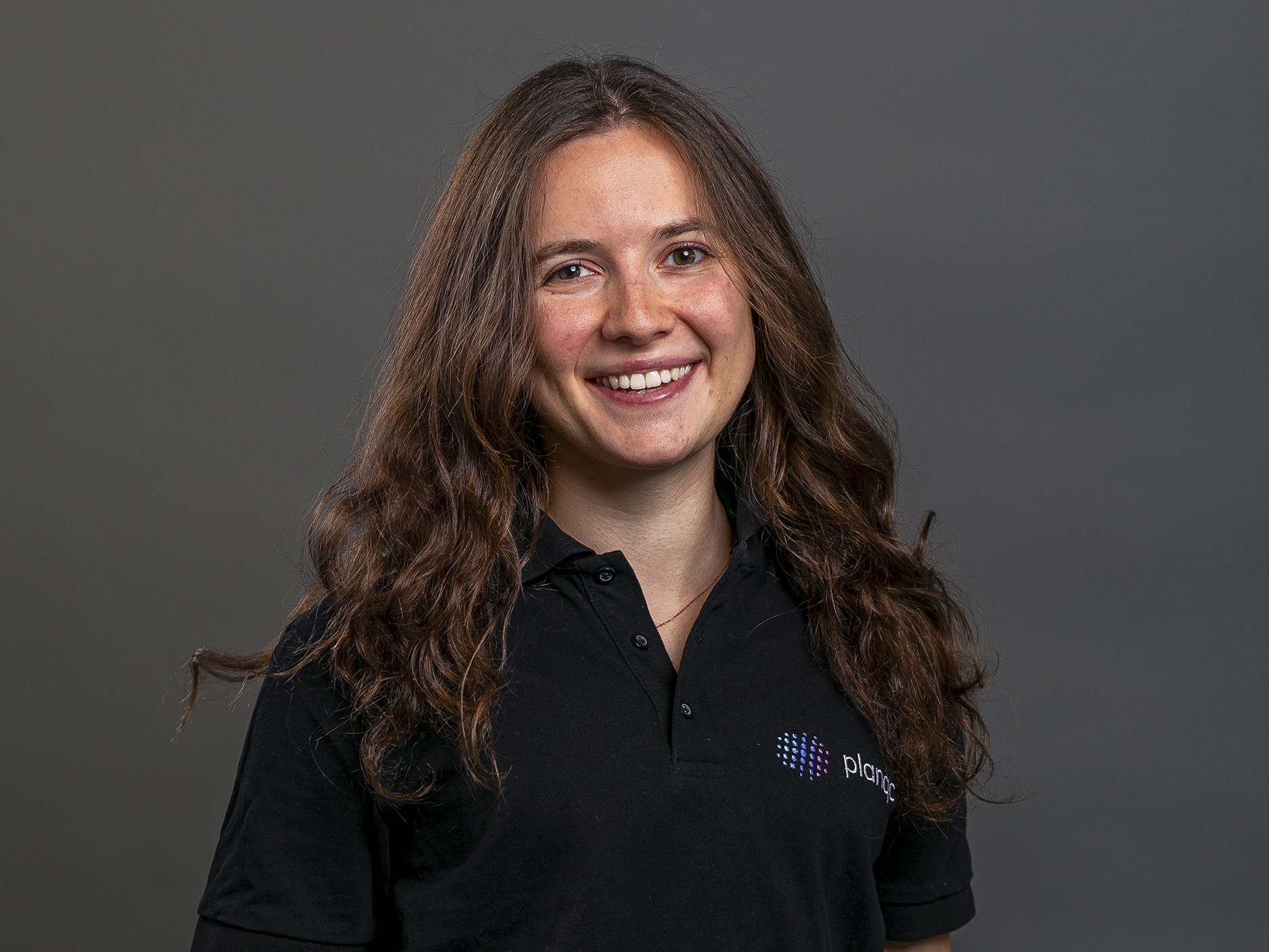
Ayse, what is your full name, current role, and your connection to planqc?
I am Ayse Kotil, I am a quantum algorithms and software engineer leading a team focused on quantum solutions for optimization problems. I lead industry projects with external partners, coordinate the team towards our vision of developing a full stack solution library for challenging optimization problems in the real world, and lead the team in technical discussions. I had started at planqc nearly 2 years ago, taking on many different tasks ranging from developing a neutral atom transpiler to running algorithm-specific simulations. My journey towards leading a team has been a continuous transition and I am growing in my personal and professional self every day with it.
Can you tell us briefly about your professional background and how you joined the company?
I am a computer scientist by training. I decided to join planqc after finishing my bachelor’s and master’s degree in computer science at Technical University of Munich. It was clear to me from the beginning of my master’s that I would keep exploring quantum computing, which fascinated me the very first moment I heard about it in a lecture.
I wanted to be at the forefront of quantum technologies, ideally at a company that builds a quantum computer, which led me to planqc. I knew beforehand about the strong theoretical and technical teams at planqc, and I thought it’d be a good challenge to join them which turned out to be true.
What inspired you to pursue a career in science, technology, or innovation?
The earliest memory I have on my interest in science is reading books about the universe. As a small kid, I was fascinated by the physics governing all the shiny things in the night sky. I would look up in the night time to ‘search for blackholes’; my mind couldn’t comprehend the scale of it. I always felt drawn for the unknown and somehow knew that I would one day end up working in a research field doing cool stuff.
“At some point I developed a certain familiarity to the gender disbalance, sort of like getting used to it. With time came experience, which brought more confidence.”
Being in a field that is still predominantly male, did you experience feeling like a minority during your studies or early career? If so, were there any particular moments, feelings, or challenges, and how did you deal with them?
Studying computer science made me feel very aware of being in the minority, as it remains one of the least gender-balanced fields of study, with women making up only around 17.6% of students in 2024. That feeling never truly faded away as I continued studying and working in male-dominated environments. The only way I could come in terms with that and could find confidence in me was by working hard, showing up every day, and communicating well with people.
At some point I developed a certain familiarity to the gender disbalance, sort of like getting used to it. With time came experience, which brought more confidence. Throughout my professional career, I was lucky enough to never have been discriminated or favored because of my gender such that the way I was received in my environment was on par with the effort I put into my work.
What has been a highlight or proudest moment in your career so far?
Not directly related to my professional career, however, as a working professional I had the chance to give talks for different audiences on quantum computing. The talks would be anywhere between a lecture and a ‘quantum computing in a nutshell’-kind of presentation for people who have never heard about it. The fascination and the enthusiasm I received from people, regardless of their age and background, reminded me each and every time of how unique my profession is, and how lucky I am to be pursuing it. I am proud of the person I am today who can teach someone about something really cool and widen their horizon even if a tiny bit.
What is your role within the company, and how does your work contribute to planqc’s mission?
I help build the applications for our quantum computers. Building the hardware is only half of the story, we need to make sure that what we build is of value for our society. This is where quantum algorithms come into play. Our team works on developing and implementing algorithms for challenging optimization problems. Quantum optimization is widely considered as one of the potential use cases for quantum computers that could bring an advantage, that is, quantum computers can potentially outperform classical computers in the quality or the runtime of solutions to optimization problems that come with a high complexity. My role is about coordinating our efforts in this rewarding but hard terrain, leading the direction we need to navigate to and making decisions on the best possible technical approaches.
Why do you think diversity of roles – from research to administration, business development, HR, and beyond – is important in quantum technology?
Quantum computing is a fascinating field because of how interdisciplinary it is. You need physicists and engineers to build the hardware; computer scientists, mathematicians and chemists to work on the quantum algorithms and applications; business and education experts to do outreach and build a community around quantum. The field thrives from diversity.
“We are all aware that we need each other’s support to build something meaningful together.”
What do you enjoy most about working at planqc?
I like the fact that I can chat with a hardware engineer sitting across from me; go downstairs and discuss an upcoming event with our business unit, or do a quick knowledge transfer with a teammate who has experience in a field I am just stepping into. We are all aware that we need each other’s support to build something meaningful together, and planqc enables a workplace that makes collaboration very intuitive.
What is your vision for the future of women in science, technology, or quantum?
I really hope that women get encouraged by the interdisciplinary nature of quantum science/computing and take on more roles within the field. Seeing a lot of different professions being represented in quantum might give women the courage to take part in it too, knowing that different perspectives will only enrich the field.
What advice would you give to young women considering a career in science, technology, or innovation?
Throughout my academical and professional career, I talked with many women in my field about what worries them and what challenges they face. A very common answer I get is that they think they are not good enough. My take on this is, that it’s okay to not be equipped with the required expertise once faced with a problem or a task. We all start somewhere. If you put enough time and energy into something and bring your passion along the way, the return of your efforts will always be rewarding.
Women tend to be much harder on themselves at the beginnings, whether it be a new job, or a hobby they pick up on. They compare themselves with their surroundings and come to the misleading conclusion that they are not good enough. My piece of advice would be to take it slow, be patient, enjoy new beginnings and a good challenge. Track your own progress, and from time to time, take a step back to see how much you have achieved. You will be surprised to see how far you have come once you turn your head from where other people are and look at the long path you have conquered.
Do you have a favorite quote, motto, or piece of advice that inspires you in your work?
As master Yoda so beautifully put: “Try not. Do, or do not. There is no try.”
Is there a fun fact about you that you’d like to share?
Outside of my professional career, I fight on kickboxing tournaments in the pointfighting discipline as an amateur athlete. I love martial arts and doing combat sports! The fun fact is that I managed to mostly stay away from major injuries in the last years of training but broke my toe recently by hitting it against a rock whilst walking. Unfortunately, I lost that fight whereas my opponent was still rock solid (pun intended).
More Women in Quantum
-
Meet Valentina Tammaro, Head of People & Culture at planqc
-
Meet Athira Krishnan Sreedevi, Quantum Hardware Engineer at planqc
-
Meet Alice Bellettini, Quantum Algorithms Engineer at planqc
-
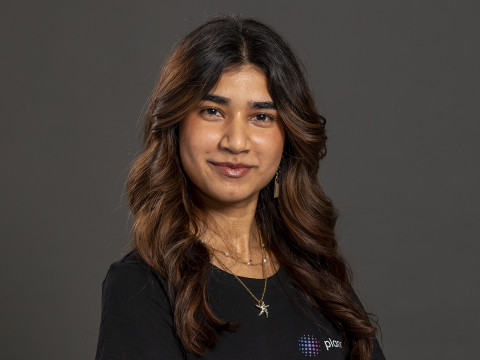
Meet Ria Jobanputra, Quantum Algorithms Engineer at planqc
-
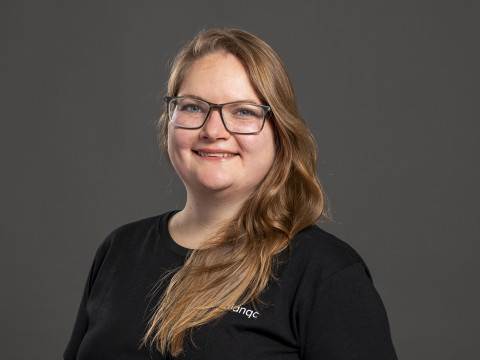
Meet Jennifer Lilieholm, Quantum Hardware Engineer at planqc