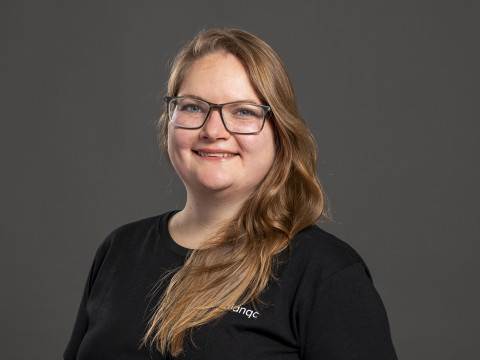
From chemistry to quantum computing: in our next Women in Quantum feature, Ria Jobanputra, Quantum Algorithms Engineer at planqc, shares how her background in molecular modelling led her into quantum technology. She reflects on forging an unconventional path into the field and why diverse perspectives are essential for the future of quantum innovation.
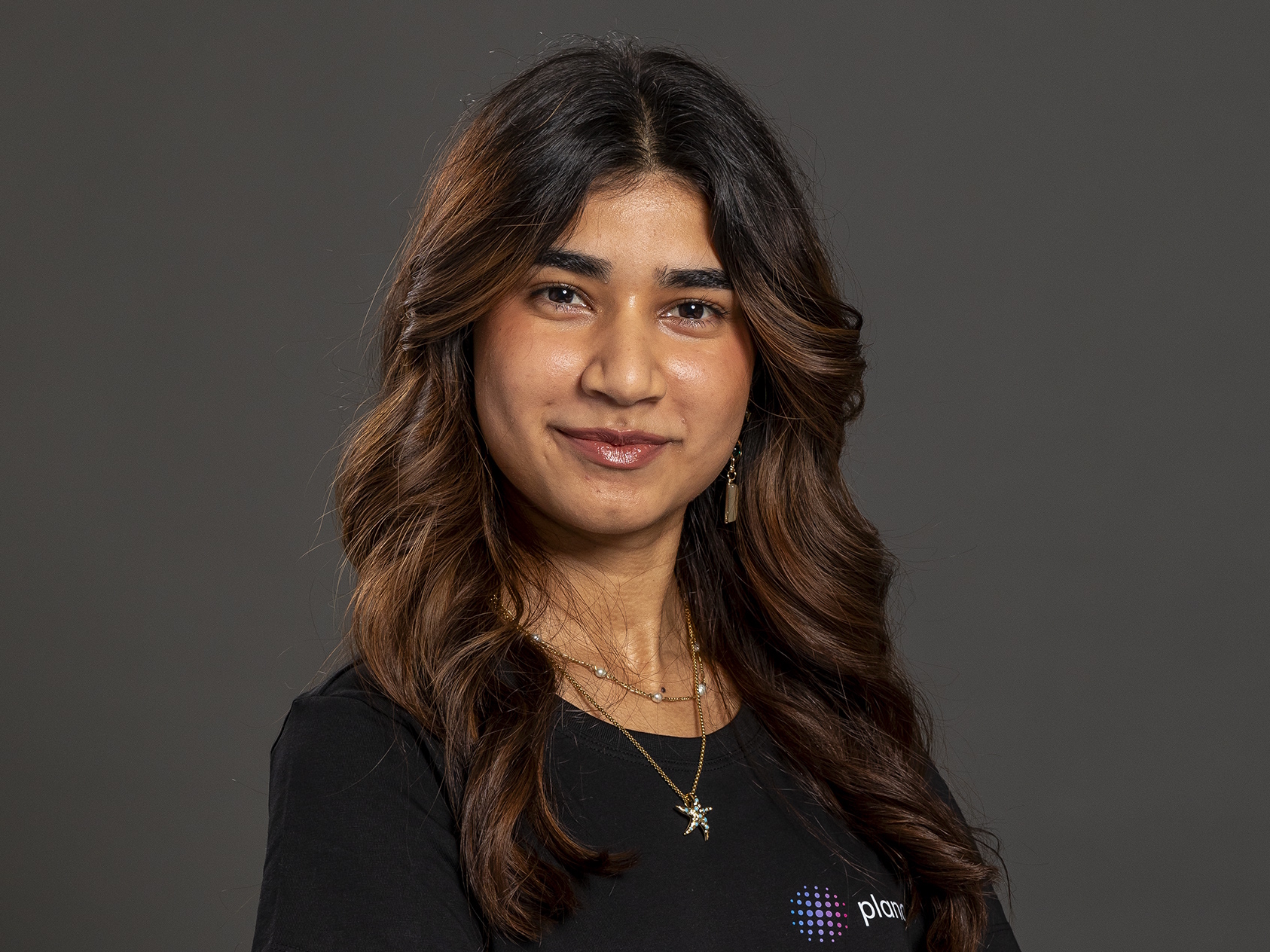
Ria, what is your full name, current role, and your connection to planqc?
My name is Ria Jobanputra, and I am a Quantum Algorithms Engineer at planqc. I work on developing quantum algorithms for quantum chemistry, with a focus on enabling more accurate and efficient molecular simulations.
Can you tell us briefly about your professional background and how you joined the company?
I have an integrated master’s degree in chemistry, with expertise in DFT, coupled-cluster methods, and molecular modelling. During my international study year in Australia, I explored a broad range of areas in chemistry, including energy and materials, giving me a strong foundation in molecular behaviour and material properties.
What led me to planqc was my interest in how quantum computing and algorithm design can advance molecular simulation. I am now working on developing and refining quantum algorithms specifically tailored for chemistry problems, aiming to make simulations more accurate and practically useful for real molecular systems.
What inspired you to pursue a career in science, technology, or innovation?
I didn’t have a single defining moment that led me here. Chemistry was the subject I enjoyed most at school, and at university my interests shifted towards the more physics-based and computational aspects of the field. Quantum technologies, particularly the neutral atom platform, appeal to me because they directly build on concepts from chemistry, such as atomic structure and interactions, and apply them in a practical way. I am also motivated by the opportunity to contribute to a field where women are still underrepresented, and to be part of shaping it as it continues to develop.
“I was fortunate in that I never really felt like out of place, despite being in a field where women are underrepresented.”
Being in a field that is still predominantly male, did you experience feeling like a minority during your studies or early career? If so, were there any particular moments, feelings, or challenges, and how did you deal with them?
I was fortunate in that I never really felt like out of place, despite being in a field where women are underrepresented. My first experience with computational chemistry was under the supervision of a highly capable and passionate female researcher who was very well respected. This took place during my international study year and had a lasting influence on how I saw both the field and my own position within it.
During my master’s year, although there were fewer women overall, those present held senior and visible roles, which meant I never felt that my progression would be limited. Outside of academia, I often find that friends and family are surprised by the path I am pursuing, but this tends to come across as interest and admiration rather than doubt.
What has been a highlight or proudest moment in your career so far?
One of the moments I am most proud of in my career so far is securing my role as a Quantum Algorithms Engineer at planqc. I moved directly from completing my master’s degree in the UK into an industry position and did so by relocating to another country. This transition was not straightforward, particularly as it is uncommon for someone with a chemistry background to move into physics-driven technology, and especially quantum. I am also one of the youngest employees at the company and the only person with a chemistry background, which has reinforced my confidence in the value of my training. While this is only the beginning of my career in this field, it represents a significant step and is something I am genuinely proud of.
What is your role within the company, and how does your work contribute to planqc’s mission?
My role focuses on expanding the range of industry problems that our technology can address. I am looking towards applications in quantum chemistry, which is still a very early area in terms of combining quantum computers with quantum chemistry methods. These create significant scope for exploration and innovation. My aim is to help identify relevant targets in this space and contribute to driving the company forward by developing and shaping these new application areas.
Why do you think diversity of roles – from research to administration, business development, HR, and beyond – is important in quantum technology?
Diversity of roles is important in quantum technology because the field is complex and rapidly evolving, and progress depends on more than just research. Different people bring different skills, perspectives, and new ways of thinking, which helps ensure ideas can be developed, coordinated, and applied effectively. Having a variety of roles also allows the field to grow in a sustainable way, making it possible to turn discoveries into practical solutions while supporting the people and teams involved. In this way, the contributions of many different types of roles are essential to advancing the field as a whole.
“It’s exciting to be in an environment where you can see ideas coming to life and where people are so enthusiastic about what they do.”
What do you enjoy most about working at planqc?
I haven’t been at the company for very long, but I really enjoy being around people who genuinely want to build something and are so easy to work with. Everyone has been really supportive, and the culture has already made me feel comfortable and settled. I also like the focus on the neutral atom approach to quantum computers, because it means there are always new ideas and ways of doing things being explored. It’s exciting to be in an environment where you can see ideas coming to life and where people are so enthusiastic about what they do. It makes me feel motivated and like I am in the right place to learn and grow.
What is your vision for the future of women in science, technology, or quantum?
I hope to see a future where women are well represented across all areas of science and technology, including emerging fields like quantum. I want young women to have visible role models and supportive environments that show them they can succeed and be respected in these careers. In quantum, I hope diverse perspectives continue to be valued so that innovation benefits from everyone’s contributions.
What advice would you give to young women considering a career in science, technology, or innovation?
I would tell young women not to be afraid to take a path that feels different from what everyone else is doing. There isn’t just one route into science, technology, or innovation, and you don’t have to follow the “expected” path to succeed. For example, many people assume you need a PhD in physics to get into quantum technology, but my own journey shows that a background in chemistry can also lead to opportunities in the field. It is important to follow what interest you, be curious, and be confident that your skills and perspective have value.
Is there a fun fact about you that you’d like to share?
I like to keep life creative and adventurous. I spend my free time dancing, getting lost in fiction books, and travelling to discover new places and cultures.
More Women in Quantum
-

Meet Valentina Tammaro, Head of People & Culture at planqc
-
Meet Athira Krishnan Sreedevi, Quantum Hardware Engineer at planqc
-
Meet Ayse Kotil, Team Lead for Gate-Based Quantum Optimization at planqc
-
Meet Alice Bellettini, Quantum Algorithms Engineer at planqc
-
Meet Jennifer Lilieholm, Quantum Hardware Engineer at planqc