In the first interview of our new Women in Quantum blog series, we speak with Isabella Fritsche, Hardware Engineer at planqc. A key contributor to the DiNAQC project, she knew from the very start that she wanted to be part of planqc when she heard about the company’s founding.
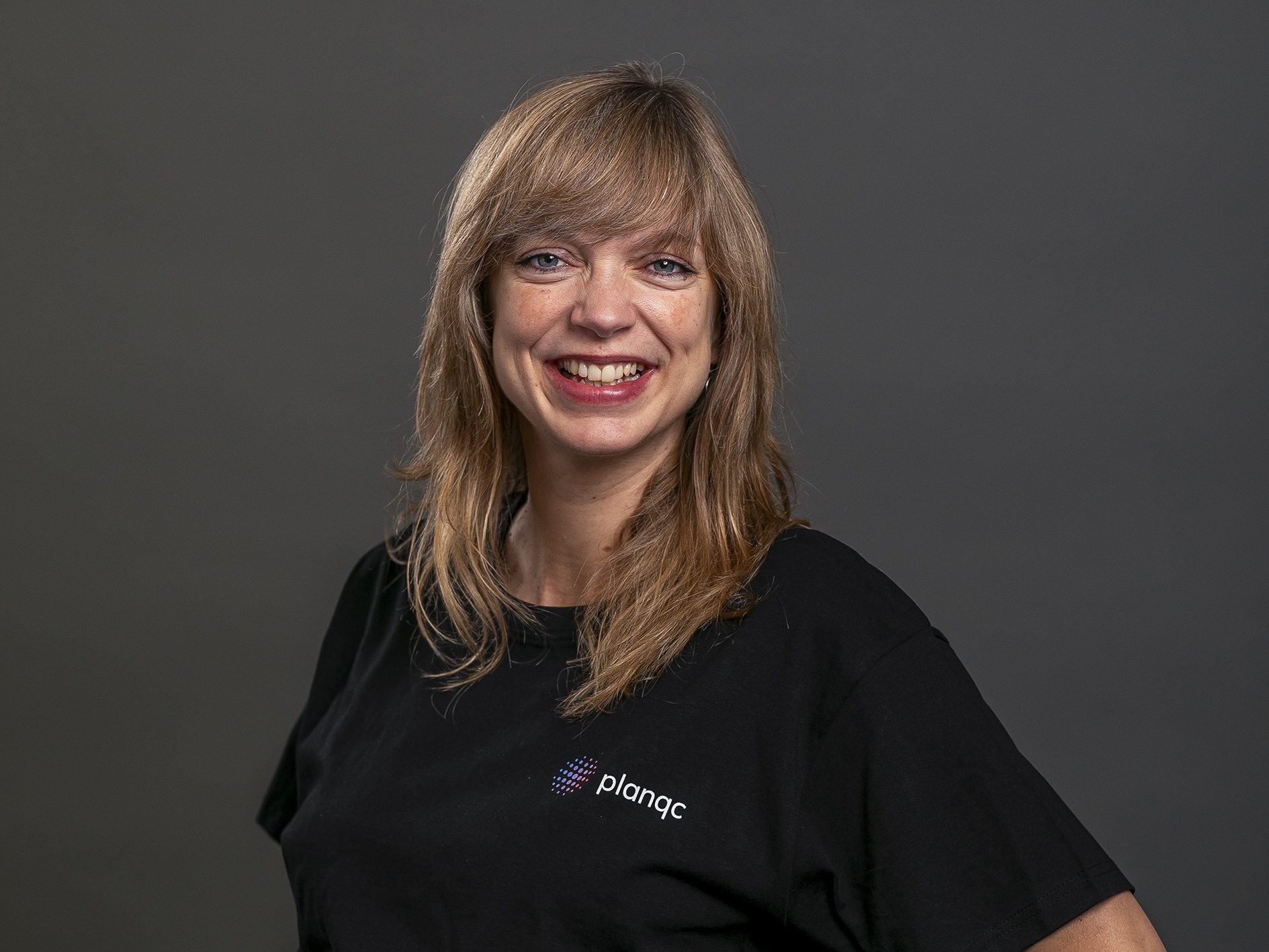
Isabella, what is your name, current role, and your connection to planqc?
My name is Isabella Fritsche and I am a Quantum Hardware Engineer at planqc. Right now, I am on parental leave, otherwise I have the function of a product owner for the DiNAQC project in Ulm.
Can you tell us briefly about your professional background and how you joined the company?
I studied physics at the University of Innsbruck and completed my PhD about strongly-interacting many body systems on a dual-species machine utilizing fermionic lithium and potassium. During my postdoc, in 2021, Alex and Lukas R. told me about the foundation of planqc. After getting to know Sebastian and his vision about the company and the hardware that was going to be built, I knew that I want to be a part of this project.
What inspired you to pursue a career in science, technology, or innovation?
Initially I wanted to study math. However, during one of my educational endeavors a friend gifted me a book about Albert Einstein. It gave me the impression that physics is about questioning the seemingly known, never taking anything for granted and always staying curious. After reading this book I was convinced that I would study physics.
“Physics is about questioning the seemingly known, never taking anything for granted and always staying curious”
Being in a field that is still predominantly male, did you experience feeling like a minority during your studies or early career? If so, were there any particular moments, feelings, or challenges, and how did you deal with them?
When I was 15, I visited a male dominated school (electrical engineering). Whenever I had a better test result than the guys my teacher would shout at them, how embarrassing it is to be worse than a girl. My grades degraded and after three years I dropped out of this school and started an apprenticeship as an electrician. I only realized in retrospective how much this discrimination affected me. Hence, I did not deal with this situation at the time.
During my apprenticeship as an electrician, I was often told that people rather wait for “real” (male) electricians than take my help. I was not very confident back then and felt bad for the workers that “just” got a girl to repair their machines. However, I got an amazing electricians department (all men) behind me. They would always treat me as an equal (in the good and the bad) and tell me how to deal with such people. During this time, I gained a lot of confidence.
During my physics studies and the PhD I heard classics like “give me this circuit plan, ill fix it for you honey”, “if you would be tall and strong I would also take you more seriously”, “she probably tries to lose weight for summer and therefore she fainted” (after a female colleague collapsed because of too much pressure from PhD). I discovered that this was the case for many female physicists, so we started to meet and discuss this issue. Towards the end of my PhD I was part of a group where we (female and male physicists) would talk about such discrimination and how to make life better for the next generation. We found that the lack of female role models is something that we all had in common. We increased female visibility in extracurricular lectures.
What has been a highlight or proudest moment in your career so far?
Three days that I will always remember: First, the day I gave one of the extracurricular lectures where I got very positive feedback from female students. Secondly, the day in my masters where I implemented a new cooling technique into the main experiment. I built it up in a prep lab for ¾ of a year and it worked on the first shot. Thirdly, my PhD-graduation.
What is your role within the company, and how does your work contribute to planqc’s mission?
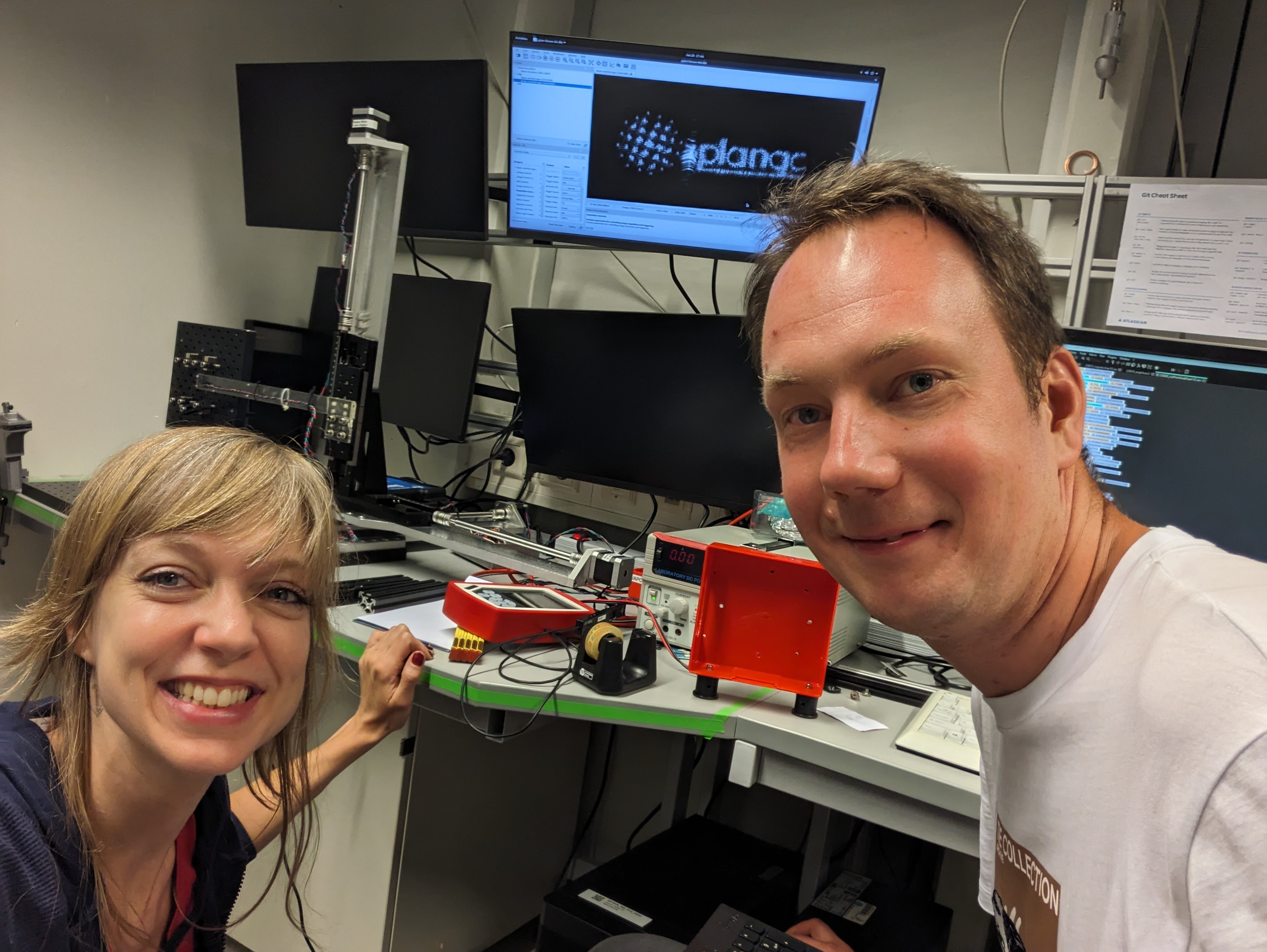
Right now, I am on parental leave. Before, I was in the lead of the DiNAQC project. That's one of the hardware projects of planqc where we will deliver a Strontium quantum computer within 3.5 years to the German Aerospace Center (DLR). There, I plan the tasks according to the agreed milestones, coordinate them with the team, put together our team and the various departments of planqc that are necessary for setting up quality control (all departments are necessary for this), communicate our progress and needs to the DLR, and work in the lab to align lasers.
Why do you think diversity of roles – from research to administration, business development, HR, and beyond – is important in quantum technology?
planqc is building quantum computers. I could write pages on the vast importance of this topic, but I will keep it short. For more detailed elaboration please talk to me: No people – no QC (HR). No money – no QC (Finance). No infrastructure – no QC (Ops). No calculations – no QC (theory). No IT infrastructure – no QC (IT). No organization – no QC (admin). No company – no QC (Bosses). No development – no future QC (b.dev.).
And last but not least: no hardware engineers – no quantum computer.
What do you enjoy most about working at planqc?
I enjoy that everyone at this company seems to be enthusiastic to be a part of building quantum computers. I enjoy that ideas and inventions are heard by our bosses. I enjoy that there is a lot of team building organized. I enjoy that I found good friends at planqc.
“Stick together. Talk to other women. If you love something, do it.”
What is your vision for the future of women in science, technology, or quantum?
My vision (or better wish) for the future of women in science, technology, or quantum is that there is no need to specifically talk about women in those fields anymore, because everyone appreciates the strength of a mixed and diverse team and respects every person that works towards a joined goal.
What advice would you give to young women considering a career in science, technology, or innovation?
Stick together. Talk to other women. If you love something, do it.
Is there a fun fact about you that you’d like to share?
When I was a child, I wanted to become a game tester. Up to this day, I have a slight addiction to video games. When I discovered Assassins Creed II (during my studies) it took me 72 hour, some cans of red bull, some frozen pizzas and I had finished the main story line.
More Women in Quantum
-
Meet Valentina Tammaro, Head of People & Culture at planqc
-
Meet Athira Krishnan Sreedevi, Quantum Hardware Engineer at planqc
-
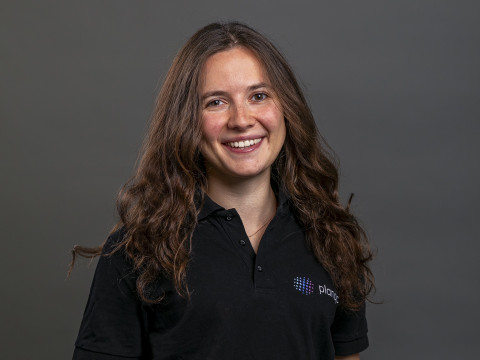
Meet Ayse Kotil, Team Lead for Gate-Based Quantum Optimization at planqc
-
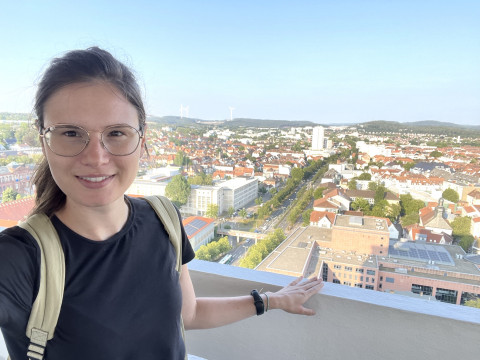
Meet Alice Bellettini, Quantum Algorithms Engineer at planqc
-
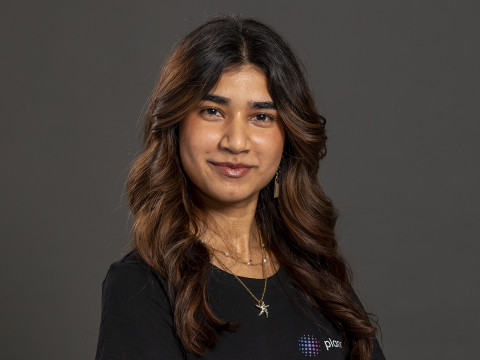
Meet Ria Jobanputra, Quantum Algorithms Engineer at planqc
-
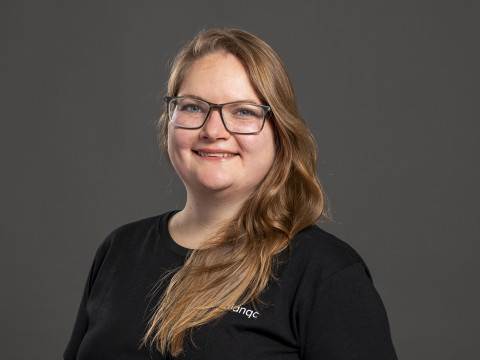
Meet Jennifer Lilieholm, Quantum Hardware Engineer at planqc